

A Multi-Angle Examination of the Application and Impact of Anti-Flash Rust Agents
Release Time:
2026-02-11

In the field of metal processing and protection, the use of flash rust inhibitors is becoming increasingly widespread. As an effective chemical agent, it prevents rapid oxidation and rust formation on metal surfaces in humid environments. This article will explore the mechanism of action, application areas, and environmental impact of flash rust inhibitors from multiple perspectives, aiming to provide comprehensive reference information for relevant industries.
I. Mechanism of Action of Flash Rust Inhibitors
Flash rust inhibitors primarily function by forming a protective film on metal surfaces. This film prevents direct contact between moisture and oxygen and the metal, thereby slowing or halting the onset of rust. This mechanism aligns with the long-term corrosion protection provided by coatings. Flash rust inhibitors can be categorised into three types: corrosion-retardant, passivating, and barrier-forming. As flash rusting arises from electrochemical reactions, employing substances with reducing properties to release negative charges constitutes the simplest and most effective method for corrosion inhibition. However, such reducing agents often exhibit excessive ionic properties, compromising the long-term water resistance of paint films. Consequently, technological advancements have led to the development of flash rust inhibitors with passivation and shielding effects. As their corrosion suppression principles remain fundamentally similar, these products also deliver sustained anti-corrosion performance.
II. Application Fields of Flash Rust Inhibitors
Flash rust inhibitors find extensive application across automotive, aerospace, marine, bridge construction, and building industries. In automotive manufacturing, they protect vehicle bodies from corrosion; within aviation, they safeguard aircraft metal structures and components; and in construction, they shield steel frameworks from adverse weather conditions. Additionally, these inhibitors are incorporated into metalworking fluids and water-based coatings to provide supplementary corrosion protection.
III. Environmental and Health Impacts
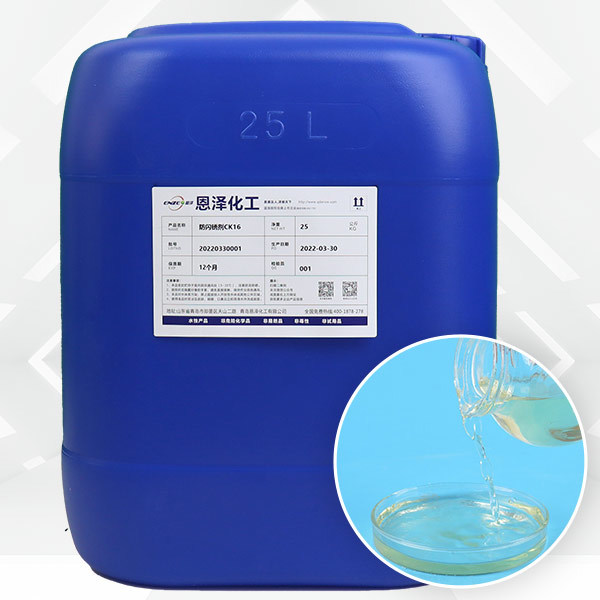
Whilst anti-flash rust agents serve an irreplaceable industrial function, their potential environmental and human health implications warrant attention. Certain formulations contain organic solvents and other chemicals that may cause pollution. In contrast, Enze's anti-flash rust agents are free from sodium nitrite, rendering them both environmentally sound and safe with no adverse effects on human health.

IV. Future Development Trends
With increasingly stringent environmental regulations and heightened public awareness of environmental protection, future anti-flash rust inhibitor development will prioritise environmental friendliness. Concurrently, enhancing the long-term stability and performance of these agents while minimising environmental impact represents a key direction for future advancement.
In summary, anti-flash rust agents play a vital role in metal protection, yet their application requires multifaceted consideration, including mechanism of action, application efficiency, and environmental and health impacts. Through continuous research and refinement, we can anticipate the development of safer, more efficient, and environmentally friendly anti-flash rust agent products, providing robust technical support for metal protection across diverse industries.


Related News
What do you want?
If you have any questions about our products, please leave your email to us and we will contact you within 24 hours.

Haier Road, Yanjialing Industrial Park, Tongji Office, Qingdao, Shandong, China
Products
Follow us

Website QR Code