

Re-Engineering Paint Flow Control Without Ruining the Finish
Release Time:
2026-07-12

For paint chemists formulating modern architectural latices or waterborne industrial finishes, managing fluid flow is a non-stop negotiation. You are trying to balance two completely opposing physical forces during application. On one hand, you want a paint that spreads beautifully, flows flat to eliminate ugly brush marks, and leaves a premium, uniform film. On the other hand, the moment that wet paint sits on a vertical steel beam or a drywall sheet, you need it to lock in place instantly. If your viscosity profile is slightly off, gravity takes over. The wet layer slides down, leaving you with severe sagging, heavy runs, and a ruined finish.
To solve this, selecting the right chemical thickener isn't just about making the liquid feel heavy in the can; it is about micro-engineering the formula's shear-thinning behavior.
Traditionally, many blenders relied heavily on legacy cellulosic thickeners or alkali-swellable emulsions (ASE). While these options are cost-effective at building low-shear viscosity—meaning they stop the paint from settling in long-term storage—they introduce a major technical blindspot. They build a highly rigid, gelatinous structure. When a painter applies brush or roller pressure, the network breaks down too drastically. The paint spatters off the roller, drags heavily under the brush, and fails to level out cleanly, leaving behind heavy, textured tracks that customers hate.
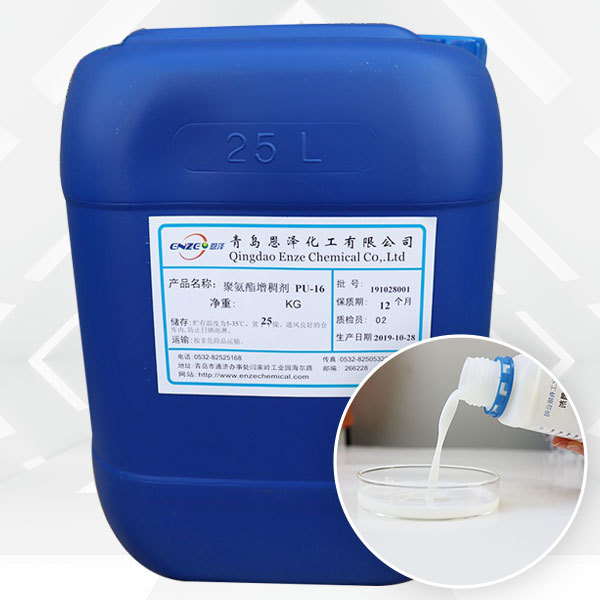
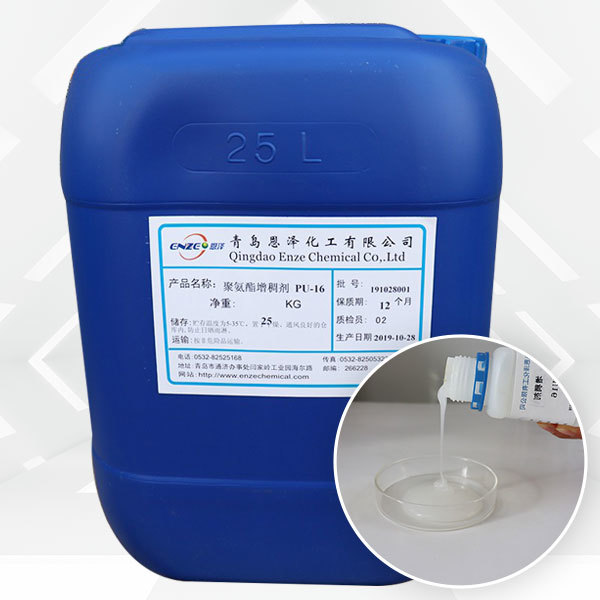
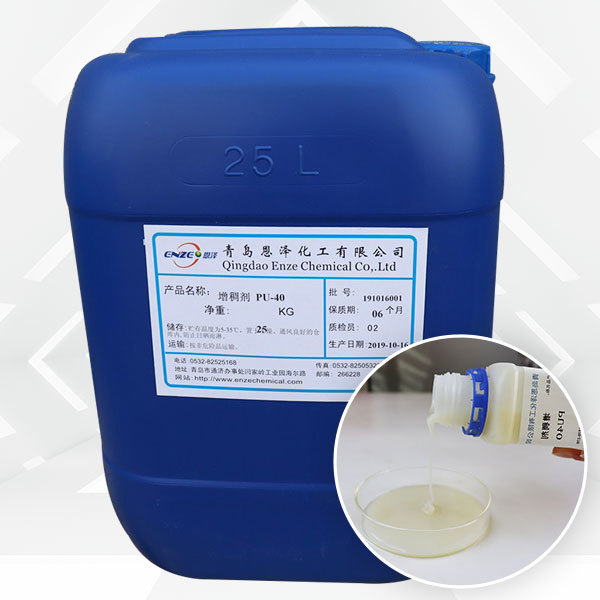
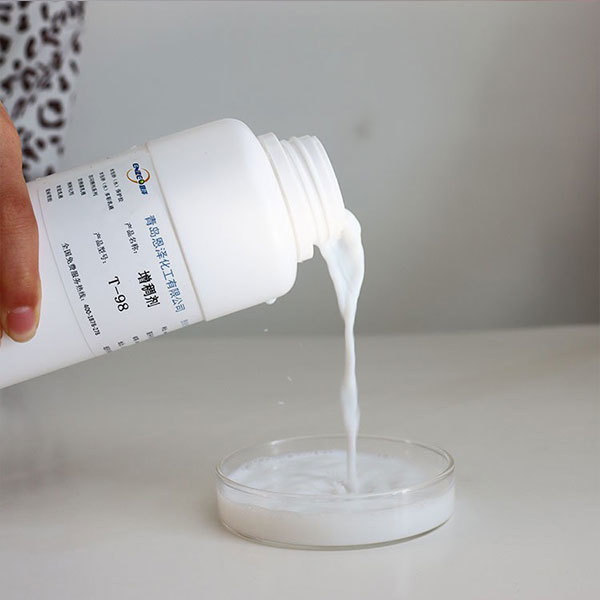
This exact limitation is why high-end industrial and premium decorative lines are shifting to advanced non-ionic polyurethane technologies, commonly specified as a HEUR rheology modifier.
Unlike old-school additives, a polyurethane-based thickener works through associative network building. Its molecular chain contains hydrophobic zones that actively lock onto your latex resin particles and anti-corrosive pigments. When the paint is under high-shear pressure—like inside an airless spray gun or under a fast-moving roller—the associative bonds temporarily unhook, allowing the paint to flow out incredibly smoothly and level flawlessly. But the moment the shear pressure stops, the network snaps back together with extreme precision. It freezes the wet film at a controlled thickness on vertical walls, completely eliminating sagging before the curing process takes over. By incorporating this smart rheology modifier into your production, you stop guessing on fluid mechanics and deliver a flawless, heavy-build coating that goes on perfectly every single time.
Related News
What do you want?
If you have any questions about our products, please leave your email to us and we will contact you within 24 hours.

Haier Road, Yanjialing Industrial Park, Tongji Office, Qingdao, Shandong, China
Products
Follow us

Website QR Code