

Why Waterborne Industrial Paints Rise or Fall on Flash Rust Protection
Release Time:
2026-07-06

In the heavy-duty manufacturing and asset-protection industries, switching to waterborne industrial paint is no longer just an environmental trend—it is a regulatory and commercial necessity. Industrial blenders are fabricating incredible water-based acrylics, epoxies, and polyurethanes designed to protect steel structures, heavy machinery, and automotive parts for years. However, waterborne systems harbor a fundamental, ironic paradox: the very water used as the safe, green carrier is inherently destructive to the bare metal substrate during the application phase.
The real danger zone occurs during the first 30 minutes after spraying or brushing. While the wet paint film sits on a freshly blasted steel or iron surface, the water is in direct, prolonged contact with highly reactive metal atoms. Before the resin has a chance to cross-link, coalesce, and build a dry barrier, an electrochemical reaction triggers almost instantly. Iron ions dissolve into the wet paint layer, causing bleeding, yellow staining, and micro-pitting. This is the classic flash rust failure, and if you don’t stop it dead in its tracks, it completely destroys the paint's initial adhesion and ruins the appearance of the entire coating job.
To defuse this chemical time bomb, a highly efficient liquid flash rust inhibitor is the absolute gatekeeper in any waterborne industrial paint formula. It acts as an immediate electrochemical stabilizer at the metal-liquid interface.

The moment the wet coating hits the metal, the active components of the flash rust inhibitor rapidly migrate to the substrate surface. They form an ultra-thin, dense passivation layer that blocks the anodic reaction of the steel. This temporarily freezes the corrosion process, giving the water a clean, safe window to fully evaporate out of the film. Once the water is gone and the resin cures into a solid barrier, the inhibitor's job is done.


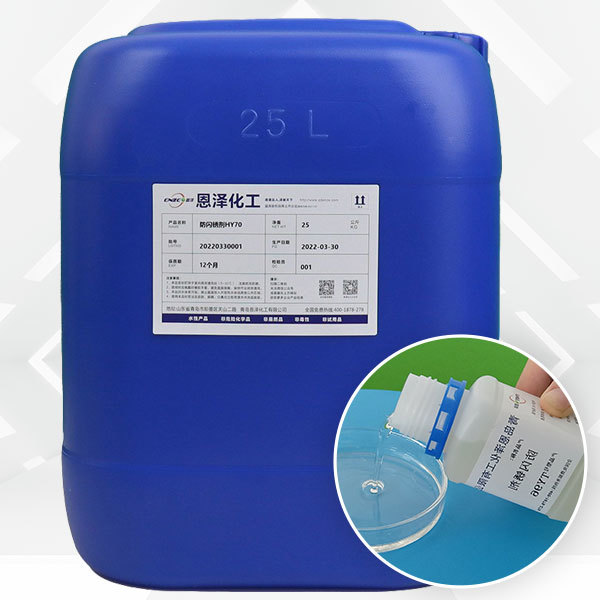

By integrating a premium, well-balanced flash rust inhibitor into your industrial paint lines, you ensure that your coatings can be applied confidently across a wide variety of real-world environments—even in humid factory workshops or during damp seasonal shifts—without the nightmare of flash rust ruining your product’s performance and your brand's reputation.
Related News
What do you want?
If you have any questions about our products, please leave your email to us and we will contact you within 24 hours.

Haier Road, Yanjialing Industrial Park, Tongji Office, Qingdao, Shandong, China
Products
Follow us

Website QR Code